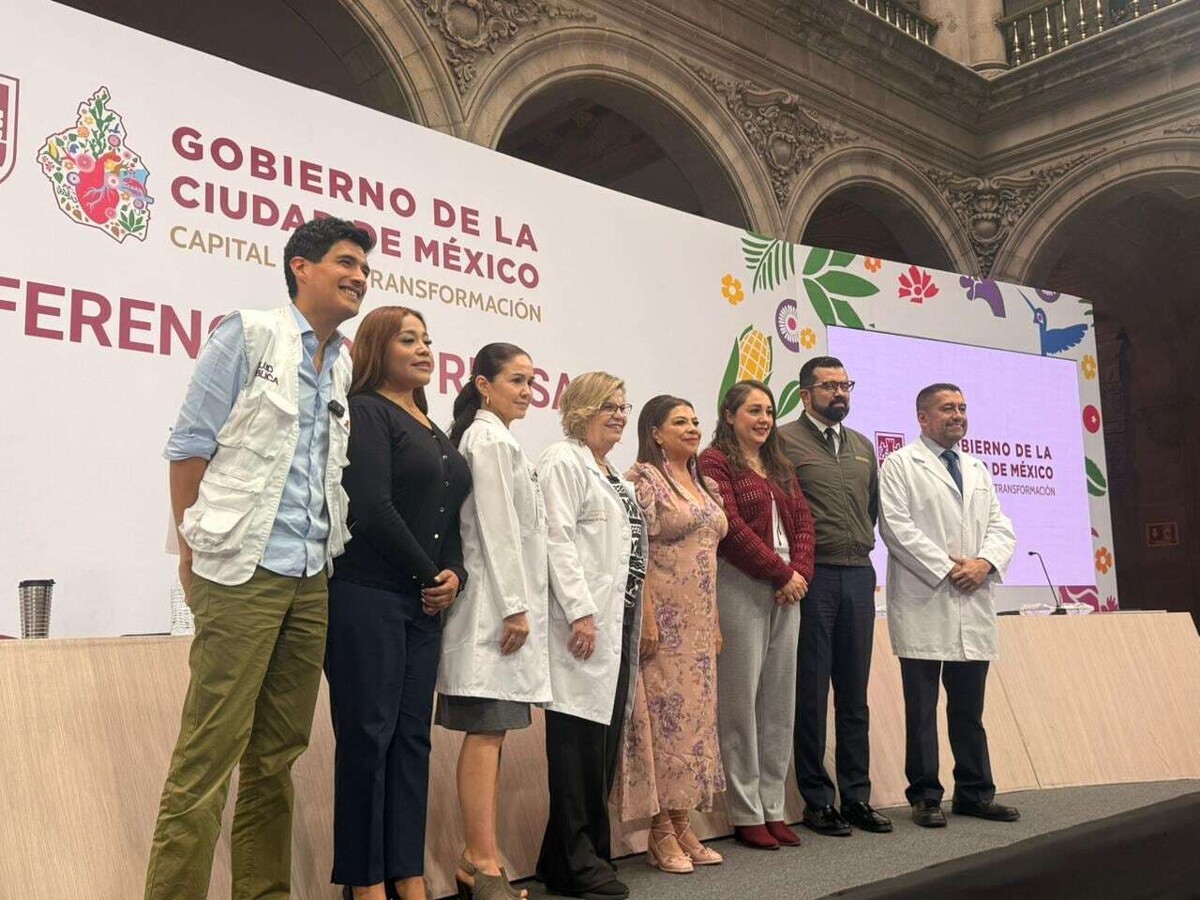
Head of Government Clara Brugada reported that 67% of the target population has already been vaccinated against measles amid the outbreak that triggered health alerts in the country's capital. Although she assured that the situation is under control, she warned that infections are still being registered, so she made an urgent call to the population not to relax prevention measures. "We can say that this outbreak is under control, but we must not let our guard down." Clara Brugada. Early response prevented a health crisis. The head of capital government described this episode as the biggest public health challenge her administration has faced, highlighting that the key was to act from the first detected cases. She recalled that the measles outbreak, which started outside the city, represented a high risk for the capital due to its population density and daily mobility. In response, the Mexico City government deployed an immediate strategy based on: mass vaccination in schools, house-to-house brigades, installation of modules in public spaces, and coordination with federal institutions. "From the first cases, we accelerated the strategy; we did not wait for the outbreak to grow." Clara Brugada. Mass vaccination in streets, transport, and neighborhoods. As part of the measles campaign, an unprecedented operation was implemented that took vaccines directly to the population: over 150 vaccination points throughout the city, administering doses in the Metro, Metrobús, and crowded spaces, extended-hour campaigns, including night shifts, and territorial interventions in areas with cases. These actions made it possible to reach up to 57,000 vaccines administered in a single day, in addition to accumulating millions of doses since 2025. Brugada emphasized that the strategy was not limited to health centers but went out into the streets to contain the measles outbreak territorially. Citizen participation and health sector recognition are acknowledged. The Head of Government also recognized the response from citizens, who turned out in mass numbers to get vaccinated, as well as the work of medical personnel and institutions such as the Mexican Social Security Institute, ISSSTE, and the Health Secretariat. The Health Secretariat highlights intensive strategy and results. In turn, the capital's Health Secretary, Nadine Gasman, stressed that the strategy implemented contained the measles outbreak through a combination of mass vaccination and intensive territorial work. She detailed that since 2025 and so far in 2026, more than 10 million people have been vaccinated, reaching 67% coverage in the target population. Additionally, she explained that a significant portion of registered cases corresponds to people with no vaccination history, which reinforces the importance of expanding coverage. Gasman also highlighted that the operation included brigades in schools, public spaces, transport, and house-to-house visits, as well as setting up posts with extended hours, some even during the early morning. Finally, she recognized the effort of health personnel, who worked extended shifts, weekends, and night shifts to bring the vaccine to the population. CDMX remains alert due to high mobility. Authorities agreed that Mexico City faces a permanent risk due to its intense mobility, as it is the center of a metropolitan area through which millions of people pass daily. Therefore, the capital government announced that the measles vaccination campaign will continue, with special attention to areas where new cases are detected. "We will continue to vaccinate and immediately attend to any outbreak," Brugada concluded.